
EIMA 2026: Smart Irrigation Put to the Test in the Field
From Idrotech to research findings: insights to help prepare for the 2027 irrigation season.
When irrigation stops, what matters is how quickly you can understand why and take action. When the machine is running normally, an equally important question remains: is it delivering the water the crop actually needs?
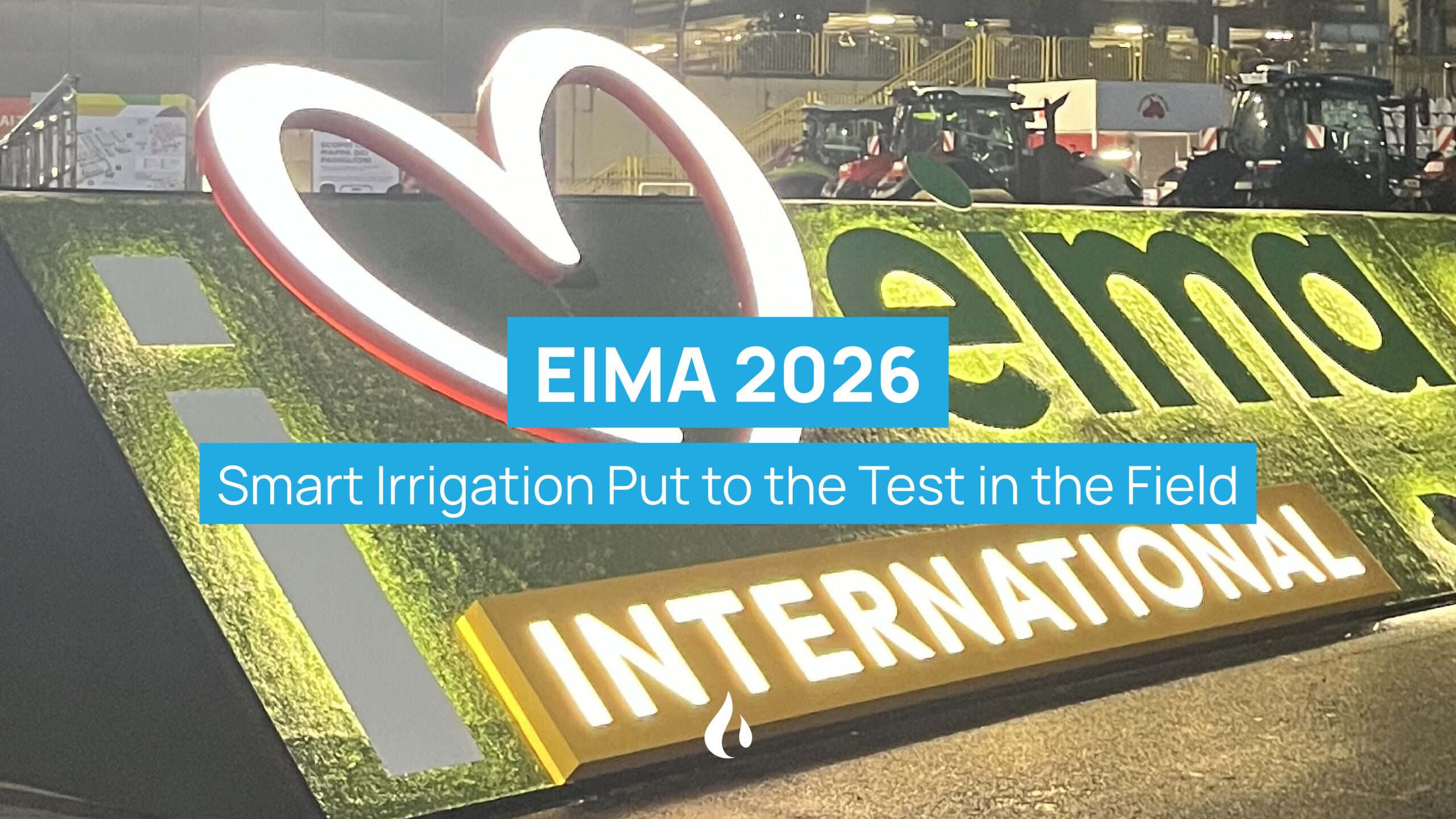
These are the questions we are asking as we look back at EIMA International 2026, which concluded in Bologna after five days, from 10 to 14 November. FederUnacoma reported 370,000 visitors, including 68,000 from abroad: an opportunity for international discussion on how to improve the performance of agricultural machinery and support the people who operate it.
At IdroMOP, we assess innovation against a practical criterion: how much does it help people manage real situations, interpret information and make useful decisions?
💧 Idrotech Brings Water Management into Machine Design
Across Halls 21, 22 and 23, EIMA Idrotech brought together technologies dedicated to irrigation and water management. The official 2026 catalogue lists 237 exhibitors, showcasing pumps, irrigation machines, components, sensors and control systems.
Our perspective is clear: value increases when the different parts of a system work together. Pressure data becomes useful when it helps verify machine operation; irrigation recommendations become valuable when they can be translated into a working programme suited to a specific field.
For manufacturers, this means designing not only the equipment but also how operators will use the information it provides. For those managing irrigation, it means being able to monitor operations and assess whether intervention is necessary based on clearer information.
🌦️ The 2026 Season Shows Why Timing Matters as Much as Water Volumes
The conditions in which these technologies must operate are very real. The Po River Basin District Authority documented 68 days of severe water-related critical conditions across the district, from 16 June to 22 August 2026. Subsequent rainfall helped conditions recover, and by mid-September the severity level had been reduced.
In Emilia-Romagna, Arpae recorded five heatwaves during the summer. Overall seasonal rainfall was close to normal, but was largely concentrated in a small number of intense events. In Veneto, looking at a different period, October ended with 60 mm of rainfall compared with the 1991–2020 average of 125 mm: 52% less, according to ARPAV.
These figures refer to different areas and periods. However, they remind us why total rainfall alone provides an incomplete picture: irrigation planning requires localised, up-to-date information interpreted in relation to soil and crop conditions.
The practical lesson is about adaptability. It is worth asking which decisions during the season just ended were made with sufficient information and which required additional checks or resulted in delayed intervention.
🏆 Award-Winning Innovations Show Where the Industry Is Heading
The EIMA 2026 competition recognised 19 Technical Innovations and 35 Technical Developments. Among the award-winning solutions, several examples show how mechanical capabilities, data collection and software are becoming increasingly interconnected.
In irrigation, Brainbox by Clear Drop Tech Irrigation uses thermal and monospectral imaging to gather crop information and manage a variable-rate centre-pivot irrigation system. According to the official product description, it can also be installed on existing pivots from different manufacturers.
Digital Irrigation IA Next Gen by Farmfront introduces natural-language interaction for controlling irrigation machines, requiring user confirmation before each action. Beyond irrigation, Safe AI Vision by Ferri uses image recognition to detect people within the working area of a remotely controlled mulcher.
These are examples of innovations recognised by the judging panel. Their descriptions outline expected benefits, but field testing is necessary to quantify these benefits across different applications. This is also a crucial step when evaluating an investment.
📊 Preparing for the 2027 Season Means Making Information Usable
The available data cannot provide a reliable forecast for the entire upcoming irrigation season. However, it can help us decide how to prepare. In our view, the quality of integration should carry increasing weight when evaluating technologies.
Before purchasing or upgrading a system, we recommend starting with a few practical questions:
- What information was I missing in 2026? Reviewing interruptions, anomalies and repeated checks helps identify the problems that need solving.
- Does the solution fit both the machine and the way people work? Compatibility, interface clarity and training should be evaluated alongside technical features.
- Who can help me when I need support? Data sharing, remote diagnostics and the actual availability of technical support should be checked before the busiest periods.
- How will I measure the results? Irrigation volumes, energy consumption, response times and production require a baseline and a comparison that takes crop and seasonal conditions into account.
We expect ease of use and the ability to make better use of existing machinery to become increasingly important factors in purchasing decisions. This is our perspective on the next investment cycle: technology must fit into everyday operations, delivering benefits that can be recognised and verified.
🌱 Incentives Can Support Investment Decisions
Those considering an investment for 2027 may be able to benefit from several support measures.
Under intervention SRD02, the 2023–2027 CAP Strategic Plan provides funding for agricultural investments aimed at improving water-use efficiency. The measures are implemented by individual Italian regions through their own calls for applications, which establish grant amounts, eligibility requirements and deadlines. Some calls are currently open, with grants that may cover up to 65% of eligible expenditure.
At the fiscal level, the 2027 Italian Budget Law, currently under parliamentary discussion, includes proposals to strengthen enhanced tax depreciation (iperammortamento) for investments in technological capital goods.
Requirements, funding rates and deadlines vary between measures. Before making a decision, it is advisable to check with a qualified adviser or agricultural trade association which investments are eligible.
One principle applies to everyone: a project built around the real problems experienced during the previous season is also easier to present and justify.
➡️ IdroMOP's Contribution Starts with Machines, Data and People
At EIMA, we met manufacturers, dealers, customers and industry professionals from different countries. These exchanges are as valuable to us as our in-house development work: they are where the requests that eventually become new features originate.
This brings us back to the opening question: when irrigation stops, how long does it take to understand why?
Within the IdroMOP ecosystem, machine control, the My ID4 app and the web portal allow users to check operating status and history, manage available functions and share information. Smart Irrigation complements these tools with irrigation recommendations based on weather, soil, crop and satellite data.
The benefit we want to deliver is clear: providing the information needed to understand what is happening and decide how to respond, together with the people who operate and support the machine.
For solutions introduced into agricultural operations in 2027, the next season will provide an initial opportunity to assess their usefulness in everyday work. We can start preparing now by addressing the questions left unanswered during 2026.
During your last irrigation season, which decision was the hardest to make? And what information would have helped you make it sooner?
Share your experience with us. Dialogue between those who develop technologies and those who work in the field is where we want to continue building the future.
References
- FederUnacoma. (2026, 15 November). Nuovo record per EIMA 2026.
- EIMA Idrotech. (2026, 7 August). Le aziende espositrici. FederUnacoma.
- EIMA Idrotech. (2026). Exhibitors catalogue 2026. FederUnacoma. Official online catalogue.
- Autorità di bacino distrettuale del fiume Po. (2026, 16 September). Siccità, il Po e il Nord tornano a respirare dopo 68 giorni.
- Arpae Emilia-Romagna. (2026, 3 September). L’estate 2026: temperature eccezionali e precipitazioni nella norma.
- ARPAV – Agenzia Regionale per la Prevenzione e Protezione Ambientale del Veneto. (2026, 5 November). Risorsa idrica in Veneto: il bilancio di ottobre. Press release.
- EIMA International – FederUnacoma. (2026, 29 September). Macchine agricole, Bologna celebra l’innovazione tecnologica. Press release available in the official archive.
- EIMA International – FederUnacoma. (2026). Novità Tecniche 2026. Official descriptions of award-winning innovations.
- Ministero dell’Agricoltura, della Sovranità Alimentare e delle Foreste. (n.d.). Piano Strategico della PAC 2023–2027 – Intervento SRD02. [Link to be added].
- Regione Piemonte. (2026). CSR 2023–2027 – Investimenti irrigui SRD02 Azione C, bando 2026.
- ItaliaOggi. (2026, 16 October). Più forza all’iperammortamento in manovra e agli strumenti della ZES.
- IdroMOP. (n.d.). Servizi.
- IdroMOP. (n.d.). Smart Irrigation.
More articles

TECH DROP: IRRIGATION 4.0
In this article you will find a brief analysis of how agriculture has changed with the advent of digitization, leading to reduced water consumption, higher crop yields, and significant reductions in energy and operational costs.

TECH DROP: ORGANIC 4.0
Italian organic enters the 4.0 era: between digital innovation and market challenges, sustainable agriculture seeks a new balance between technology, value and profitability.

TECH DROP: CARBON FOOTPRINT
Carbon Footprint and Stage V Engines: Technology and Sustainability Work Together. Learn how IdroMOP control units help reduce emissions, optimize performance, and make the most of every drop of fuel.

TECH DROP: HOW A IDROMOP PRODUCT IS BORN
How is a IdroMOP product developed?
From listening to real needs in the field to design, from internal testing to validation on real agricultural systems: a rigorous process based on standards, procedures, and reliability.

TECH DROP: THE EVOLUTION OF IRRIGATION
Hardware remains essential. But today, software and data make the difference. Real value emerges when field data becomes operational decisions through automation, real-time analysis, and remote management.

TECH DROP: WHAT WE LEARNED
11 years in the irrigation industry have taught us one thing: innovation begins with listening. Designing technology in the company is only part of the job. The real test always takes place in the field, alongside those who use the machines on a daily basis.

TECH DROP: AGRICULTURE AND THE FUTURE SEEN BY YOUNG PEOPLE
The future of agriculture is already here: more digital, more efficient, more competitive. Discover smart, practical solutions designed to truly make a real difference in the field.

TECH DROP: HOW TO MAKE YOUR IRRIGATION MACHINE SMART
Electronic control, sensors and connectivity transform a traditional irrigation machine into a smart system capable of generating data, monitoring performance and supporting more efficient operational decisions.

TECH DROP: HOW THE ROLE OF FARMERS IS CHANGING
Agriculture is changing: less reaction, more prevention. Data, monitoring, and digital tools are transforming the way fields are managed.
TECH DROP: WATER WASTE DOES NOT BEGIN WHEN IRRIGATION STARTS
Water waste does not begin when a valve is opened. It begins when the decision to irrigate is made without all the necessary information. Irrigating with precision means making the best use of every litre of water.
TECH DROP: THE SEASON IS OVER. DID YOU REALLY LEARN ANYTHING?
The season is over, but its value is measured by more than just the harvest. The data collected throughout the season can make all the difference when planning the next one.
TECH DROP: AGRICULTURE IN VENETO
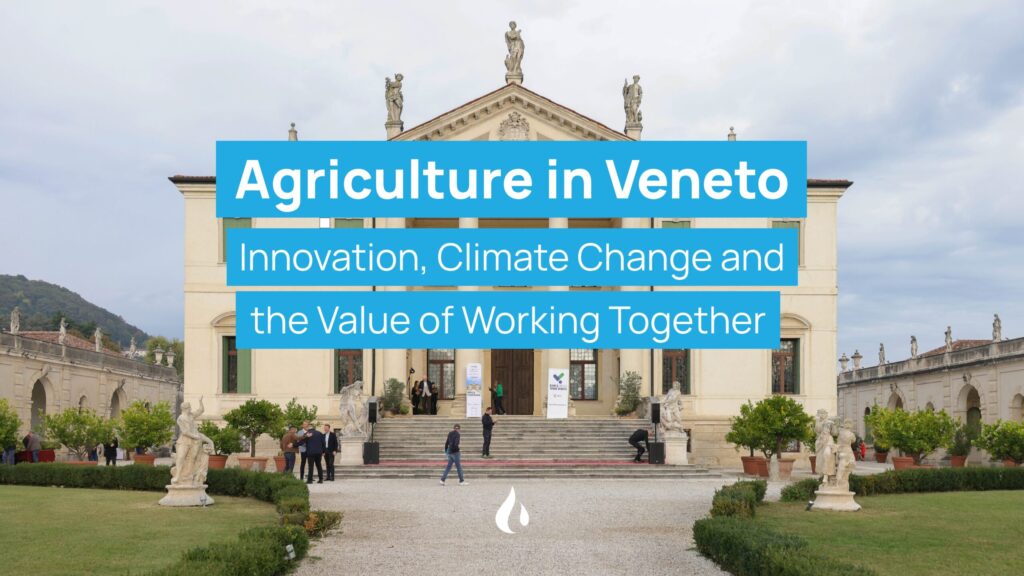
Technology, climate and water management: at Amica Campagna, the focus was on the future of agriculture in Veneto. A day of discussion between institutions, researchers and businesses on the sector’s challenges and opportunities.