
How the Role of Farmers Is Changing
From Field Management to Information Management
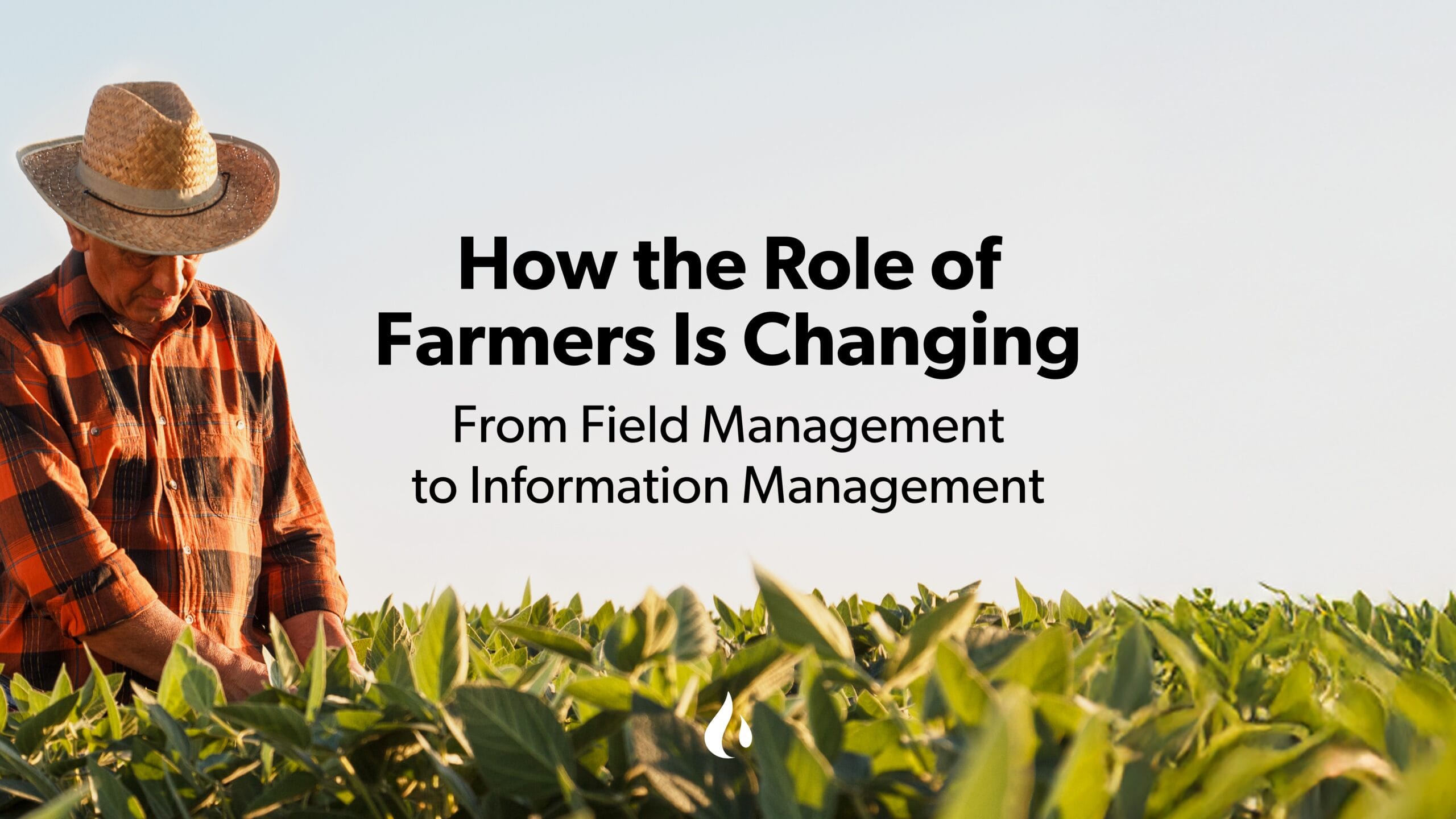
Experience remains the most valuable asset. It is what enables farmers to understand their land, crops, and the specific needs of their business. But the context has changed: the climate is becoming increasingly unpredictable, costs are rising, and decisions must be made faster than ever before.
Today, farmers are no longer responsible only for cultivating their fields.
They are also responsible for managing a complex system of information.
📊 From Experience to Data Monitoring
For many years, farming decisions were based primarily on direct experience: observing the soil, evaluating weather conditions, checking irrigation systems, and intervening whenever something went wrong. This approach still has tremendous value. The difference today is that it can be supported by objective, continuously updated data. Technology is not replacing experience. It is providing new tools to enhance it. Today, it is possible to access real-time information that, until only a few years ago, was available only after a problem had already occurred.
For example:
- water availability
- energy consumption
- soil conditions
- system performance
- operating time
- irrigation history
The goal is not simply to collect more data, but to make better decisions.
⚙️ How Decision-Making Is Changing
Technology does not replace the farmer.
It changes the way farming is managed.
Remote Control
The real value of remote control is not the ability to start a machine from miles away. It is knowing when there is no need to go into the field. Being able to check the status of a system, adjust an operating parameter, or receive a notification when an anomaly occurs allows farmers to intervene only when necessary, reducing travel time and minimizing machine downtime.
Sensors
Sensors do not make decisions. They turn observations into measurable data. Soil moisture, temperature, pressure, flow rate, and operating conditions become concrete data on which to base decisions.
Continuous Monitoring
Having access to real-time data makes it possible to identify changes before they become problems. An abnormal increase in energy consumption, a pressure variation, or operating conditions outside normal parameters can be detected immediately, enabling faster intervention and reducing the risk of interruptions during irrigation.
Historical Data
Every irrigation cycle generates valuable information. Analyzing historical data makes it possible to compare different seasons, evaluate system performance, identify recurring issues, and plan future operations more accurately. The collected data becomes a valuable resource for improving future decisions.
🌱 Agriculture Is Becoming Increasingly Preventive
In recent years, agriculture has been shifting from a reactive approach to one focused on prevention.
Knowing what is happening before problems arise allows farmers to act before a minor issue turns into equipment downtime or additional costs.
This is why the value of digital technologies goes far beyond automation.
Their real strength lies in transforming data into faster, more informed, and more effective decisions.
Conclusion
Farmers will always know their land better than anyone else.
The difference today is that they can make decisions based not only on experience, but also on objective, up-to-date, and measurable information.
Technology does not replace work in the field.
It simply helps farmers make more informed decisions.
More articles

TECH DROP: IRRIGATION 4.0
In this article you will find a brief analysis of how agriculture has changed with the advent of digitization, leading to reduced water consumption, higher crop yields, and significant reductions in energy and operational costs.

TECH DROP: ORGANIC 4.0
Italian organic enters the 4.0 era: between digital innovation and market challenges, sustainable agriculture seeks a new balance between technology, value and profitability.

TECH DROP: CARBON FOOTPRINT
Carbon Footprint and Stage V Engines: Technology and Sustainability Work Together. Learn how IdroMOP control units help reduce emissions, optimize performance, and make the most of every drop of fuel.

AGRITECHNICA 2025
Agritechnica 2025 has confirmed itself as the benchmark event for international agromechanics. In this scenario, our team presented their vision of smart irrigation, based on control, integration and technological reliability.

TECH DROP: HOW A IDROMOP PRODUCT IS BORN
How is a IdroMOP product developed?
From listening to real needs in the field to design, from internal testing to validation on real agricultural systems: a rigorous process based on standards, procedures, and reliability.

TECH DROP: THE EVOLUTION OF IRRIGATION
Hardware remains essential. But today, software and data make the difference. Real value emerges when field data becomes operational decisions through automation, real-time analysis, and remote management.

TECH DROP: WHAT WE LEARNED
11 years in the irrigation industry have taught us one thing: innovation begins with listening. Designing technology in the company is only part of the job. The real test always takes place in the field, alongside those who use the machines on a daily basis.

TECH DROP: AGRICULTURE AND THE FUTURE SEEN BY YOUNG PEOPLE
The future of agriculture is already here: more digital, more efficient, more competitive. Discover smart, practical solutions designed to truly make a real difference in the field.

TECH DROP: HOW TO MAKE YOUR IRRIGATION MACHINE SMART
Electronic control, sensors and connectivity transform a traditional irrigation machine into a smart system capable of generating data, monitoring performance and supporting more efficient operational decisions.