
Agriculture in Veneto: Innovation, Climate Change and the Value of Working Together
EVENT · AMICA CAMPAGNA 2026 · Villa Cordellina Lombardi, Montecchio Maggiore (VI) · Sponsored by IdroMOP
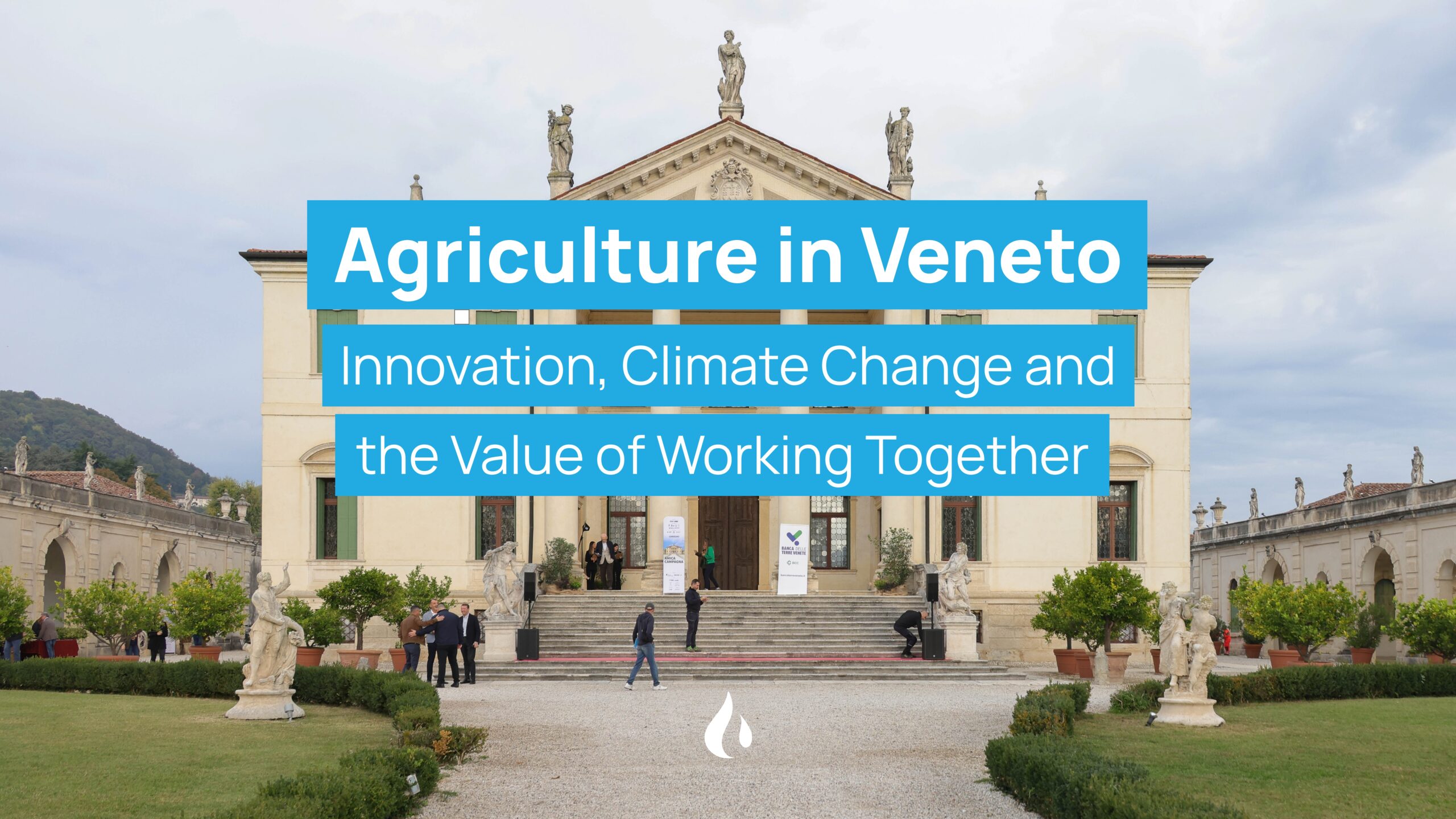
At Amica Campagna, institutions, universities and businesses discussed the challenges facing agriculture. One message stood out: technology delivers real value when it turns data into practical decisions.
Amica Campagna: Bringing the Region Together
On Sunday, 18 October, Villa Cordellina Lombardi in Montecchio Maggiore hosted Amica Campagna, an event bringing together farmers, local communities, institutions, researchers and businesses.
The event was organised by Gruppo Editoriale Athesis and Il Giornale di Vicenza, in collaboration with the Municipality of Montecchio Maggiore, the Province of Vicenza, Coldiretti Vicenza, Campagna Amica Vicenza and Banca delle Terre Venete, under the patronage of the Veneto Region and with the involvement of the Universities of Padua and Verona.
The Coldiretti Campagna Amica farmers’ market, alongside stands featuring local producers and businesses, and a programme of agricultural conferences created an opportunity for dialogue between tradition and innovation.
The venue was particularly meaningful. As the President of the Province recalled, Villa Cordellina was originally built around a farmyard where grain was once laid out to dry. With Amica Campagna, agriculture had symbolically returned home.
Two major issues were at the centre of the discussions: technological innovation and climate change.
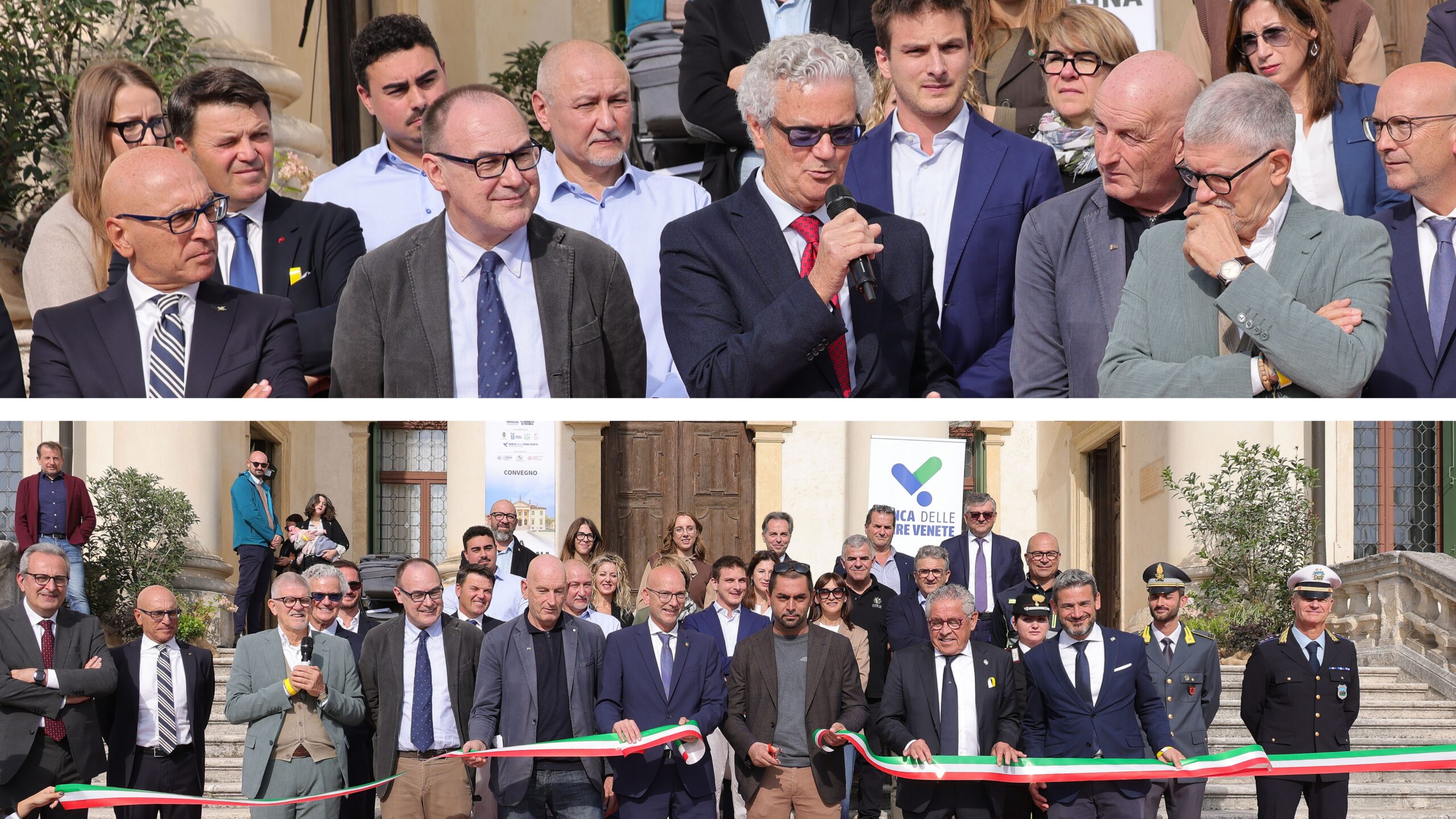
Innovation: Collecting Data Is Not Enough. We Need to Use It
The conference “Technology and AI in Agriculture” brought together representatives from institutions, research and finance to discuss the opportunities offered by digitalisation.
One idea emerged clearly: innovation does not necessarily mean purchasing new technology, but learning to make better use of the tools already available.
Marco Sozzi, from the TESAF Department at the University of Padua, highlighted resources farmers can already access, including satellite data from the European Copernicus programme and Veneto’s RTK network for precision machine positioning.
These tools, together with technologies already purchased through Industry 4.0 and 5.0 incentives, could deliver significant benefits if fully utilised.
However, having access to data is not enough.
Massimo De Marchi, from the University of Padua’s DAFNAE Department, discussed the livestock sector, where sensors and monitoring systems collect information about animals and farms every day.
The real challenge is turning this information into clear, practical guidance and helping farmers interpret the data.
Dario Bond, Veneto’s Regional Councillor for Agriculture, shared a similar vision, proposing that the digital farm record should evolve from an administrative requirement into a practical management tool.
By integrating georeferenced land data, crop information, satellite data and sensors, such a system could help farmers answer very specific questions: How much water does the crop need? Is this the right time to irrigate?
From the financial sector, Eugenio Adamo, General Manager of Banca delle Terre Venete, emphasised the importance of supporting technological investment with specialist expertise and appropriate financial solutions.
The shared message was clear: digitalisation creates value when information becomes a tool for better decision-making.
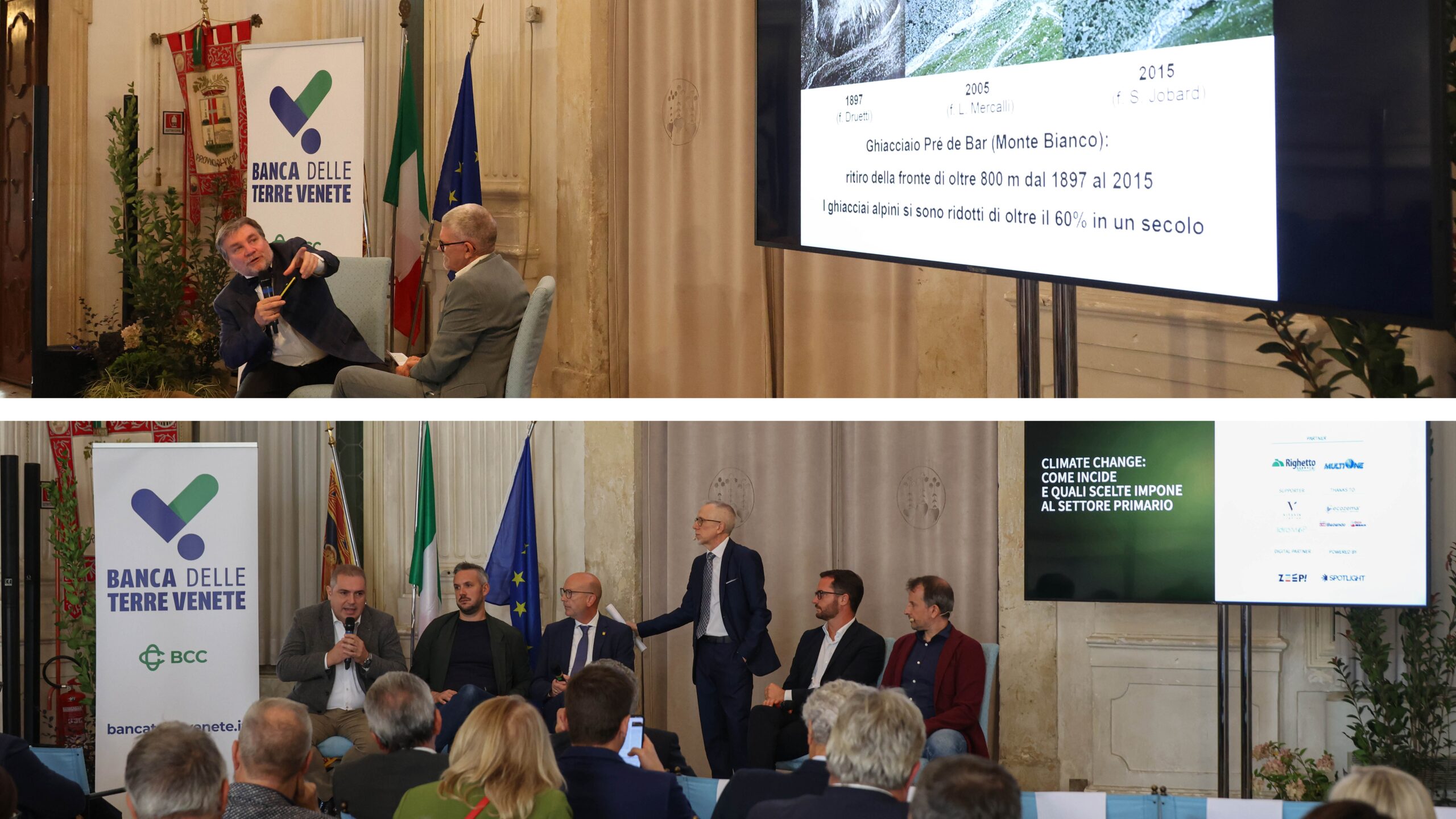
Climate Change: Rethinking Water Management
If technology can support more informed decisions, climate change makes this capability increasingly important.
During the afternoon, climatologist Luca Mercalli, President of the Italian Meteorological Society, presented an overview of ongoing climate changes.
During summer 2026, the Po Valley, including the Vicenza and Padua areas, experienced between 80 and 90 days characterised by daytime temperatures above 30°C and nighttime temperatures above 20°C.
According to the figures presented, the Po Valley’s average summer temperature was comparable to that of Tunis.
This scenario calls for a rethink not only of water availability, but also of how water is stored and used.
Mercalli highlighted the need to reduce losses from water distribution networks, improve water storage infrastructure and consider small on-farm reservoirs where local conditions allow.
But infrastructure alone is not enough.
Agricultural production must also become more adaptable, supported by soil management practices that preserve fertility and improve water retention.
Measuring consumption can be the first step towards changing it.
Another practical example came from De Marchi’s research. In a project funded by the Veneto Region, water monitoring systems installed on three livestock farms led to an approximately 5% reduction in consumption during the first six months.
Simply knowing how much water is being used can therefore help change behaviour.
The same principle applies to irrigation: sustainable water management is not just about using less water, but about applying it at the right time and in the right way to meet crop requirements.
The Role of Businesses: From Research to Practical Applications
A common need emerged from the discussions: to create a stronger connection between research findings and the everyday requirements of agricultural businesses.
Technology companies have an important role to play in this process, transforming data and automation into accessible solutions that farmers can actually use.
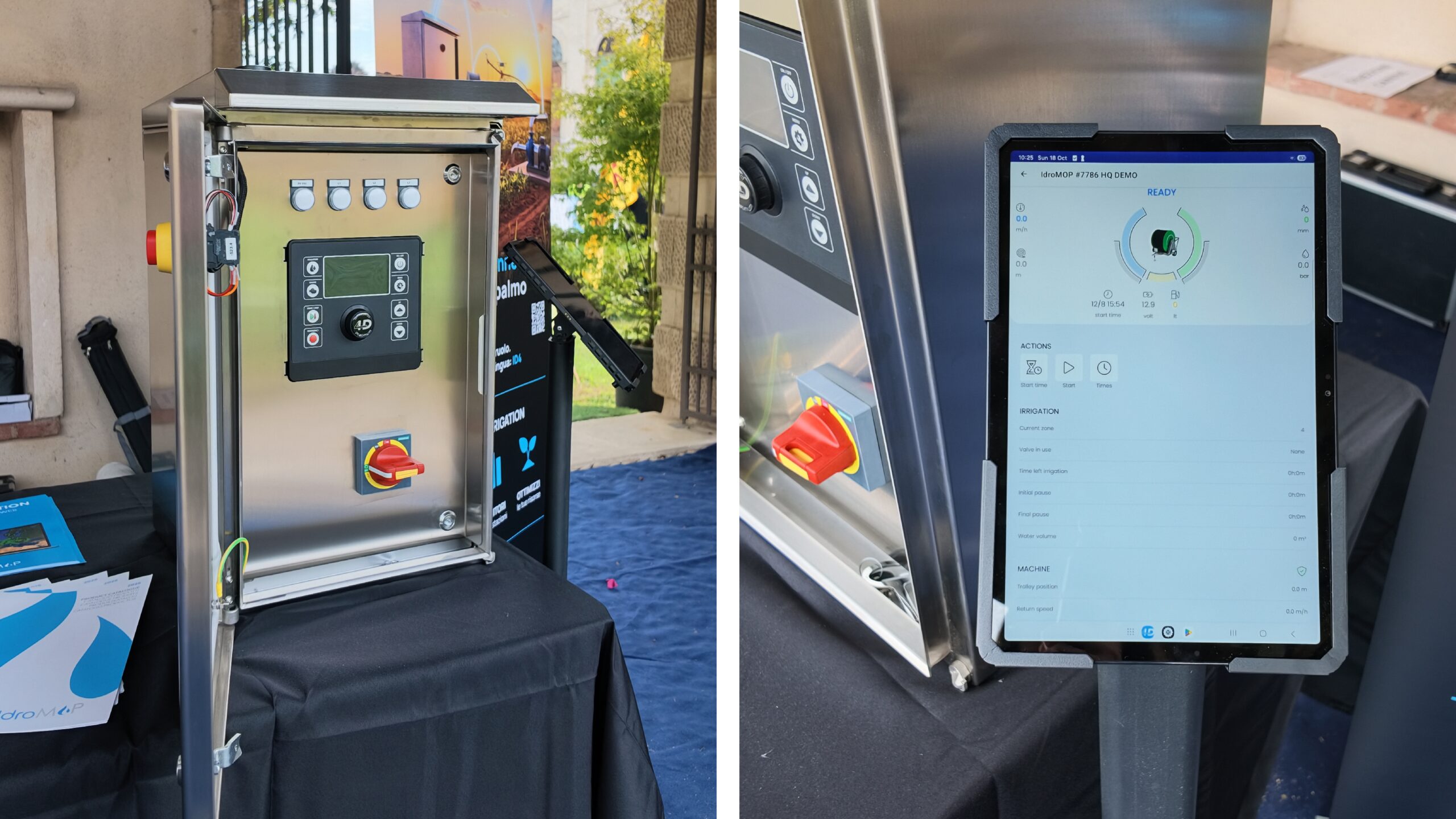
With this vision in mind, IdroMOP chose to support Amica Campagna, taking part with an exhibition area dedicated to its irrigation control and management technologies.
The topics discussed throughout the event, from intelligent data use to more efficient water management, are closely connected to our daily work.
Our Smart Irrigation approach is built around the objective of turning machine data into practical information that supports farmers’ decisions.
Through the MyID4 app and the ID4 Irrigation web platform, diesel-driven pumping units, electric pumping units and irrigation machines can be remotely controlled and monitored within a single interconnected system.
The aim is to help farmers move from data to action, enabling more informed management of both their machines and water resources.
Participating in the event also provided an important opportunity to engage directly with visitors, institutions and the research community.
As Mirco Povolo, CEO of IdroMOP, pointed out, the interest shown by visitors, the questions raised and the meetings with institutional and research representatives confirmed the value of initiatives that bring different organisations together.
It was an opportunity to gather new ideas, better understand the sector’s needs and continue developing practical innovation within the region.
Conclusion: Turning Words into Action
When asked whether he was optimistic, Luca Mercalli replied that, after forty years of conferences and discussions, he would declare himself optimistic “the day I see action”.
This reflection also captures the challenge of agricultural innovation: talking about technology, sustainability and climate change is not enough. Knowledge must be translated into concrete action.
From water management to data utilisation, from scientific research to solutions developed by businesses, Amica Campagna demonstrated the importance of bringing different areas of expertise together.
Because true innovation is measured not only by the technologies we develop, but by their ability to make a real difference to the people who use them.
And it is through collaboration between researchers, institutions, businesses and farmers that innovation can create lasting value for the region.
BIBLIOGRAPHY:
Sources
Speeches at Amica Campagna 2026, Villa Cordellina Lombardi, Montecchio Maggiore (VI), October 18, 2026
- Conference “Technology and AI in agriculture”. Speakers include Dario Bond (Councilor for Agriculture, Veneto Region), Marco Sozzi (TESAF Department, University of Padua), Massimo De Marchi (DAFNAE Department, University of Padua), and Eugenio Adamo (General Manager, Banca delle Terre Venete).
- Meeting with Luca Mercalli, climatologist and president of the Italian Meteorological Society.
- Official program of the event: Gruppo Editoriale Athesis – Il Giornale di Vicenza.
Insights
- European Copernicus Programme: https://www.copernicus.eu
- ISPRA, “Copernicus: the European Earth Observation Programme and its applications”: https://www.isprambiente.gov.it/it/archivio/notizie-e-novita-normative/notizie-ispra/2020/06/copernicus-il-programma-europeo-di-osservazione-della-terra-e-le-sue-applicazioni
- Veneto Region, Network of GNSS stations for precision positioning: https://www.regione.veneto.it/web/ambiente-e-territorio/stazioni-gps
- University of Padua, TESAF Department: https://www.tesaf.unipd.it
- University of Padua, DAFNAE Department: https://dafnae.unipd.it
- Ministry of Enterprise and Made in Italy, Transition Plan 5.0:https://www.mimit.gov.it/it/notizie-stampa/mimit-al-via-il-piano-transizione-5-0-apre-oggi-alle-12-la-piattaforma-per-prenotare-gli-incentivi
- Italian Meteorological Society (European Meteorological Society profile):https://www.emetsoc.org/members/member/smi/
- IdroMOP, Smart Irrigation, MyID4 app and ID4 Irrigation platform:https://www.idromop.com
More articles

TECH DROP: IRRIGATION 4.0
In this article you will find a brief analysis of how agriculture has changed with the advent of digitization, leading to reduced water consumption, higher crop yields, and significant reductions in energy and operational costs.

TECH DROP: ORGANIC 4.0
Italian organic enters the 4.0 era: between digital innovation and market challenges, sustainable agriculture seeks a new balance between technology, value and profitability.

TECH DROP: CARBON FOOTPRINT
Carbon Footprint and Stage V Engines: Technology and Sustainability Work Together. Learn how IdroMOP control units help reduce emissions, optimize performance, and make the most of every drop of fuel.

TECH DROP: HOW A IDROMOP PRODUCT IS BORN
How is a IdroMOP product developed?
From listening to real needs in the field to design, from internal testing to validation on real agricultural systems: a rigorous process based on standards, procedures, and reliability.

TECH DROP: THE EVOLUTION OF IRRIGATION
Hardware remains essential. But today, software and data make the difference. Real value emerges when field data becomes operational decisions through automation, real-time analysis, and remote management.

TECH DROP: WHAT WE LEARNED
11 years in the irrigation industry have taught us one thing: innovation begins with listening. Designing technology in the company is only part of the job. The real test always takes place in the field, alongside those who use the machines on a daily basis.

TECH DROP: AGRICULTURE AND THE FUTURE SEEN BY YOUNG PEOPLE
The future of agriculture is already here: more digital, more efficient, more competitive. Discover smart, practical solutions designed to truly make a real difference in the field.

TECH DROP: HOW TO MAKE YOUR IRRIGATION MACHINE SMART
Electronic control, sensors and connectivity transform a traditional irrigation machine into a smart system capable of generating data, monitoring performance and supporting more efficient operational decisions.

TECH DROP: HOW THE ROLE OF FARMERS IS CHANGING
Agriculture is changing: less reaction, more prevention. Data, monitoring, and digital tools are transforming the way fields are managed.
TECH DROP: WATER WASTE DOES NOT BEGIN WHEN IRRIGATION STARTS
Water waste does not begin when a valve is opened. It begins when the decision to irrigate is made without all the necessary information. Irrigating with precision means making the best use of every litre of water.
TECH DROP: THE SEASON IS OVER. DID YOU REALLY LEARN ANYTHING?
The season is over, but its value is measured by more than just the harvest. The data collected throughout the season can make all the difference when planning the next one.